The Definitive Guide to Industrial Pipe Fabrication: Process, Standards, and Strategic Maintenance

The Backbone of Modern Industrial Infrastructure

Modern industrial facilities rely on piping systems that function as their circulatory network, transporting liquids, gases, steam, and chemicals under extreme pressures and temperatures. Industrial pipe fabrication—and the specialized pipe fabrication services behind it—forms the backbone of this infrastructure.

Across the Southeast’s diverse industrial landscape, from poultry processing to petrochemical production, the demand for precision‑engineered piping is rising. At Hilton Mechanical Contractors (HMC), our “precision first” philosophy guides every project. Operating from our Gainesville and Alpharetta fabrication facility, we engineer systems built to withstand corrosive environments, thermal expansion, and high‑pressure service conditions.

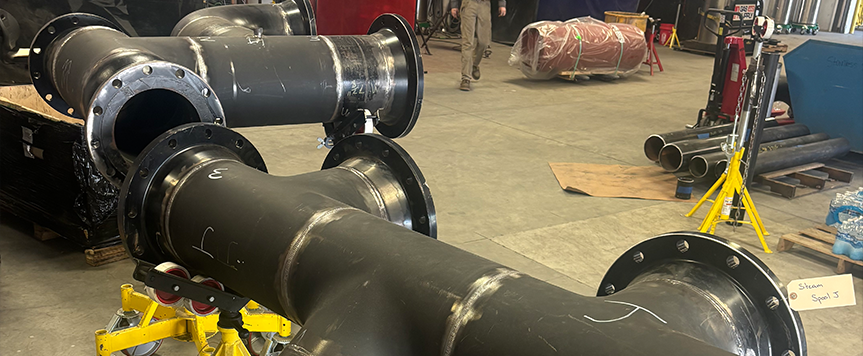
A major part of this reliability comes from our ability to produce fully assembled pipe spools—pre‑fabricated sections of piping complete with fittings, flanges, and pipe supports—that streamline installation and reduce on‑site risk.

The 7 Critical Stages of the Pipe Fabrication Process

A disciplined, sequential workflow is essential for high‑integrity industrial piping. Each stage directly impacts system longevity and safety.

Material Selection: Carbon steel remains the industrial standard, but facilities handling corrosive media or steam often require stainless steel, duplex alloys, or copper for specialized applications. Petrochemical plants may demand exotic alloys for chemical resistance.

Pipe Cutting: Mechanical saws and plasma torches deliver precise cuts, ensuring each section fits perfectly when assembled into modular pipe spools.

End Preparation / Beveling: Clean bevels ensure proper weld penetration and long‑term structural integrity.

Fitting & Assembly: Pipes are aligned with elbows, tees, and flanges. During this stage, temporary pipe supports maintain alignment before tack welding.

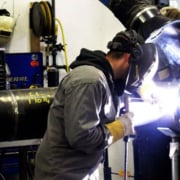
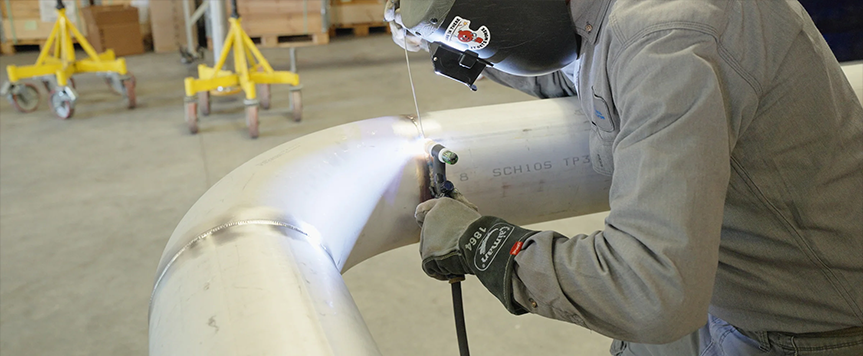
Welding (Multi‑Pass Process): Root, Hot, Fill, and Cap passes create a weld capable of withstanding high‑pressure service. TIG welding is often required for high‑purity or steam lines, while MIG and Flux‑Cored processes accelerate production for large‑diameter spools.

Inspection & Testing: NDT methods such as Radiographic Testing and Phased Array Ultrasonic Testing verify weld integrity inside the controlled environment of our fabrication facility.

Finishing & Coating: Industrial coatings, galvanization, and corrosion inhibitors protect piping systems used in chemical, food processing, and petrochemical environments.

Navigating Essential Codes & Standards (ASME & AWS)

Industrial piping is governed by strict codes due to the risks associated with high‑pressure systems:

ASME B31.3 – Process Piping (petrochemical, chemical, pharmaceutical)
ASME B31.1 – Power Piping (steam systems, heating/cooling plants)
ASME Section IX – Welding Qualifications
AWS D1.1 – Structural Steel & Pipe Supports

Prefabrication inside a climate‑controlled shop dramatically improves code compliance compared to unpredictable field conditions.

The Strategic Advantage: Shop Prefabrication vs. Field Assembly

The industry is rapidly shifting toward modular skid systems and pre‑assembled pipe spools. Field welding is vulnerable to weather, humidity, and site congestion—especially in Metro Atlanta’s dense construction market.
By contrast, HMC’s controlled fabrication facility environment allows:
– Higher weld repeatability
– Faster production of custom pipe spools
– Integration of pipe supports and structural components
– Reduced on‑site labor requirements
– Improved quality control for steam, hydronic, and chemical systems

This approach is especially valuable for data centers, food processing plants, and petrochemical facilities requiring precise, contamination‑free piping.

Industrial Pipe Maintenance: Maximizing Longevity & Performance

A high‑quality system is only as reliable as its maintenance program.

Advanced Inspections: PAUT identifies internal thinning or cracking before failure.
Mechanical Cleaning: Pigging and hydro‑jetting remove deposits that restrict flow in water, chemical, or steam lines.
Corrosion Protection: Coatings and inhibitors protect carbon steel, stainless steel, and copper piping from Southeast humidity.
Pressure Monitoring: Real‑time sensors detect anomalies early, preventing catastrophic failures in high‑pressure or petrochemical applications.

Precision and Reliability in the Southeast

High‑value industrial pipe fabrication requires engineering discipline, strict code adherence, and proactive maintenance. Hilton Mechanical Contractors delivers custom piping, modular skid systems, and precision‑built pipe spools engineered to perform in the Southeast’s most demanding industrial environments—from food processing to petrochemical production.

Our teams in Gainesville and Alpharetta stand ready to support your next project with industry‑leading pipe fabrication services and a commitment to doing it right the first time.

Why Choosing the Right Fabrication Subcontractor Matters for Your Next Project

When a construction or industrial project calls for custom metal components, piping systems, or structural assemblies, the project’s success often hinges on one critical decision: selecting the right fabrication subcontractor. At Hilton Mechanical, we understand that general contractors, project managers, and facility owners need a partner who delivers precision, reliability, and on-time performance—every single time.

Fabrication work sits at the intersection of engineering and craftsmanship. A single miscalculation or delay in the fabrication shop can ripple through an entire project schedule, driving up costs and creating headaches for everyone involved. That’s why the fabrication subcontractor you choose deserves as much scrutiny as your architect or general contractor.

What Does a Fabrication Subcontractor Do?

A fabrication subcontractor specializes in designing, cutting, welding, and assembling metal components based on project blueprints and specifications. Unlike general contractors who oversee entire builds, a fabrication subcontractor focuses specifically on producing custom parts—whether that’s structural steel, sheet metal fabrication, piping, or specialized mechanical assemblies—that integrate seamlessly into the larger project.

This work typically happens in a controlled shop environment before components are transported and installed on-site. That distinction matters because shop-based fabrication allows for tighter tolerances, better quality control, and more efficient use of materials compared to field fabrication.

Hiring an experienced fabrication subcontractor like Hilton Mechanical means you get:
-Precision-engineered components built to exact dimensional requirements
-Faster turnaround times through dedicated fabrication shop capacity
-Reduced on-site labor and installation errors
-Quality control processes that meet industry codes and standards
-Scalable capacity for both small jobs and large-scale custom fabrication projects
-Fewer change orders caused by field-fit issues or measurement discrepancies

Why Hilton Mechanical Stands Out as a Fabrication Subcontractor

Not all fabrication subcontractors offer the same level of expertise or accountability. Hilton Mechanical has built a reputation across the mechanical contracting industry by combining skilled craftsmanship with modern fabrication equipment and a commitment to deadlines.

In-House Fabrication Capabilities

Rather than outsourcing critical fabrication work, Hilton Mechanical maintains in-house shop capabilities, including the capacity to weld & assemble complex assemblies from start to finish. This allows us to control quality at every stage—from initial cutting to final assembly—while reducing delays and communication gaps that often accompany third-party subcontracting chains and long supply chain dependencies.

Keeping fabrication in-house also means better visibility into production timelines. Our production teams can give general contractors precise status updates rather than chasing down outside vendors for information. This transparency builds trust and helps keep larger projects on schedule.

Industry Experience Across Sectors

As a trusted metal fabrication subcontractor, Hilton Mechanical has supported projects across commercial, industrial, and institutional sectors. Whether a general contractor needs custom structural steel fabrication, handrails, stainless steel components, or specialty piping systems, our team brings the technical know-how to execute complex fabrication scopes without compromising quality.

This cross-sector experience matters because every industry has different requirements. A hospital project demands different piping standards than a manufacturing facility, and a commercial office build has different structural steel needs than an industrial plant. Our team’s broad exposure means we can adapt quickly to whatever specifications a metal fabrication project requires.

Commitment to Codes and Quality Standards

Every fabrication project undergoes rigorous quality checks to ensure compliance with local and national building codes. Hilton Mechanical’s ISO 9001 certification reflects our commitment to consistent quality management across every custom fabrication project, from initial blueprints to final delivery. This attention to detail protects general contractors from costly rework, inspection failures, or project delays down the line.

Beyond code compliance, safety is embedded into our fabrication process from start to finish. Welding services follow strict protocols, and finished components are inspected before they ever leave the shop. This proactive approach reduces liability for general contractors and gives facility owners confidence that the finished product will perform reliably for years to come.

Modern Equipment and Technology

Fabrication technology has advanced significantly, and staying current with equipment upgrades directly impacts production quality and speed. Hilton Mechanical invests in modern cutting, laser welding, and steel fabrication services equipment to ensure every project benefits from efficient processes and consistent results.

This investment in technology also enables tighter tolerances in custom metal fabrication, reducing the likelihood of field adjustments during installation—a common pain point when working with less-equipped fabrication subcontractors. We also offer powder coating options, providing clients with a durable, corrosion-resistant finish for structural steel, handrails, and other exposed components.

What to Look for When Hiring a Fabrication Subcontractor

If you’re evaluating fabrication subcontractors for an upcoming project, consider these key factors:
-Shop capacity and fabrication equipment (CNC machines, welding certifications, cutting technology)
-Track record with similar project types and scopes
-Communication responsiveness during the bidding process and production phases
-Ability to meet tight construction schedules
-References from past general contractors or project owners
-Bonding and insurance coverage appropriate for project size
-Willingness to collaborate during the design and pre-construction phase
-Certifications such as ISO 9001 that demonstrate consistent quality standards

Choosing a fabrication subcontractor isn’t just about price; it’s about finding a contract manufacturing partner who understands your project timeline, communicates proactively, and delivers components that fit perfectly the first time. A lower bid from an unproven fabrication subcontractor can quickly become more expensive than a slightly higher bid from a reliable partner once rework, delays, and change orders enter the picture.

The Value of Early Collaboration

One often-overlooked advantage of working with an experienced fabrication subcontractor is the ability to collaborate early in the design process. When Hilton Mechanical is brought in during pre-construction or design development, we can flag potential fabrication challenges before they become costly problems on-site. This kind of early input often leads to smarter material choices, streamlined installation sequences, and ultimately, a smoother project from start to finish.

Partner with Hilton Mechanical for Your Next Fabrication Project

Whether you’re a general contractor bidding on a new commercial build or a facility manager needing custom metal fabrication, Hilton Mechanical brings the expertise, equipment, and reliability your project deserves. Our production teams work closely with project stakeholders from the design phase through final installation, ensuring every fabricated component meets specifications and deadlines.

We understand that every project has unique demands, and we tailor our fabrication approach—whether it’s structural steel, sheet metal, or stainless steel assemblies—to your specific scope, timeline, and budget. From initial consultation to final delivery, our goal is to make the fabrication process one less thing you have to worry about.

Ready to discuss your next project? Contact Hilton Mechanical today to learn how our fabrication subcontractor services can keep your project on schedule and within budget.
Industrial Fabrication Services: Advanced Piping & Hydronic Systems by Hilton Mechanical

In today’s industrial landscape, performance depends on more than structural components—it relies on the efficiency, reliability, and precision of critical piping and hydronic systems. From food and beverage processing to the chemical industry, these systems are essential to maintaining consistent industrial production and protecting valuable industrial equipment.

At Hilton Mechanical, our approach to industrial fabrication services is centered on the systems that keep facilities running. Rather than focusing on structural steel or general steel fabrication, we specialize in the fabrication and installation of process-critical piping systems that directly impact performance, safety, and uptime.

Understanding Industrial Fabrication in Modern Facilities

Since the industrial revolution, fabrication has evolved far beyond basic metalwork. Today, industrial fabrication services play a key role in supporting complex infrastructure, enabling efficient operations, and reducing the risk of costly downtime or even an industrial accident.

For many facilities, the most important systems are not structural—they are the ones that move fluids, regulate temperature, and support production processes.

Hilton Mechanical focuses on these high-impact industrial uses, delivering:
-Stainless steel piping for sanitary and hygienic environments
-Carbon steel systems for heavy-duty mechanical and chill water applications
-PP-RCT piping for corrosion resistance and long-term performance

These systems are designed with both industrial engineering principles and real-world operating conditions in mind.

Hydronic Systems: The Operational Backbone

Hydronic systems are the backbone of many modern industrial facilities, enabling precise temperature control and energy efficiency. Whether supporting process cooling or facility-wide heating and cooling, these systems are essential to maintaining consistent output and protecting sensitive equipment.

Our team combines practical expertise with advanced industrial design to ensure every system is optimized for performance, longevity, and ease of maintenance.

Material Selection for Demanding Applications

Material selection plays a critical role in system performance and lifecycle cost. Different industries—and even different processes within the same facility—require tailored solutions.

-Food and beverage facilities typically rely on sanitary stainless steel systems to meet strict cleanliness standards.
-Chill water systems often utilize carbon steel or PP-RCT for durability and efficiency.
-PP-RCT is increasingly used across industries due to its corrosion resistance and scalability in both new and retrofit applications.

For example, PP-RCT systems such as Aquatherm have been successfully implemented in brewery environments, including installations similar to those used in beer production facilities like Cherry Street Brewing at Halcyon.

Prefabrication and Modular Efficiency

As industrial expansion continues across growing regions and industrial cities, efficiency in construction and installation has become a major priority. Hilton Mechanical addresses this through prefabrication and modular system design.

We fabricate skidded and modular piping systems using state-of-the-art equipment in a controlled environment, allowing for:
-Faster installation timelines
-Reduced on-site labor and disruption
-Improved quality control
-Greater cost predictability for capital projects

These prefabricated solutions are ideal for new builds and can significantly streamline project management efforts across complex job sites.

Engineered for Retrofits and Real-World Constraints

Not every project starts from scratch. Many facilities require upgrades within active operations, where downtime must be minimized, and integration with existing systems is critical.

Hilton Mechanical’s in-house engineering team develops solutions that account for real-world constraints and support rework, retrofits, and phased installations. This approach ensures that new systems align with existing infrastructure while improving overall performance.

Supporting Critical Industrial Sectors

Our work supports industries that depend on reliable, high-performance systems tied to natural resources, manufacturing, and processing. These include:
-Food and beverage processing
-Manufacturing and industrial production
-Energy and utilities
-Chemical and process industries

In each case, our fabrication services are designed to enhance operational efficiency while supporting long-term growth and industrial expansion.

A Focused Approach to Industrial Fabrication

While some providers offer broad capabilities across structural steel and material handling systems, Hilton Mechanical maintains a specialized focus. We prioritize the systems that directly influence process performance rather than taking on one-off structural steel projects outside our core expertise.

This focus allows us to deliver higher-quality outcomes in the areas that matter most to our clients.

Why Hilton Mechanical?

Clients choose Hilton Mechanical for our ability to combine engineering, fabrication, and installation into a seamless process. Our team understands how to design and build systems that perform under demanding conditions while aligning with project goals and budgets.

We bring:
-Deep expertise in piping and hydronic systems
-Experience with stainless steel, carbon steel, and PP-RCT materials
-Prefabrication capabilities using state-of-the-art equipment
-Strong project management from concept through installation
-A commitment to safety, reliability, and long-term performance

Partner with Hilton Mechanical

Whether you are planning a new facility, upgrading aging infrastructure, or improving efficiency through modular systems, Hilton Mechanical delivers industrial fabrication services built around your process needs.

Contact our team to learn how our expertise in piping and hydronic systems can support your next project in today’s evolving industrial nation.

The Importance of Hydronic Piping in Data Center Cooling Systems

In the high-stakes world of data center infrastructure, the server is the heart, but the hydronic piping system is the circulatory system. As chips get hotter and densities climb, the reliance on water—and other cooling fluids like refrigerant—to whisk away heat has never been more critical. However, moving thousands of gallons of fluid through a room filled with multimillion-dollar electronics isn’t just a system design and engineering challenge; it is a regulatory one.

Installing hydronic piping is far more than connecting tubes. It is an exercise in risk management. A single failed joint or a misinterpreted code can lead to catastrophic leaks, downtime, or a failure to obtain an occupancy permit. To build a resilient facility, you must navigate a complex web of international, national, and local codes that dictate how these pipes are designed, joined, and maintained.

The Backbone of the Modern Data Center: Why Hydronic Piping Matters

The transition from air-cooled “raised floor” environments to high-density liquid cooling, often utilizing high-efficiency chillers and cooling towers, is no longer a future trend—it is the current standard. Hydronic piping is the backbone of this shift because water is roughly 3,500 times more effective at heat transfer than air. This efficiency, often facilitated by advanced heat exchangers and fan coils, enables data centers to achieve lower Power Usage Effectiveness (PUE) ratings and reduced operating costs. Still, it also heightens the demands on the mechanical infrastructure.

If a pipe fails in a commercial office building, you might get a wet carpet. If a pipe fails in a data center, you risk a “thermal runaway” event or an electrical short that can take down global services. This is why the industry treats hydronic piping, including supply and return piping, and its associated distribution systems with the same gravity as high-pressure steam or volatile gas lines. The codes we follow are the guardrails that ensure this lifeblood of the data center remains contained and controlled.

Navigating the Regulatory Landscape: Which Codes Govern Your Project?

When you begin a project, you quickly realize that there isn’t one single “Book of Data Center Piping.” Instead, you are looking at a layered hierarchy of authorities. Understanding this hierarchy is the difference between a smooth inspection and a costly teardown.

The Hierarchy of Standards and Regulations

At the top of the pyramid are Model Codes like the International Mechanical Code (IMC) and the Uniform Mechanical Code (UMC). These provide the legal framework adopted by states and municipalities. Below are Consensus Standards from organizations such as ASME, ASHRAE, and CSA that provide the technical “how-to.” Finally, there are Application-Specific Standards, such as those from the NFPA, that focus on safety and fire prevention.

Your local Authority Having Jurisdiction (AHJ) is the ultimate arbiter. They decide which version of these codes applies to your specific GPS coordinates. As a mentor would tell you: always check the local amendments first, because cities like Chicago and New York often have stricter requirements than the base national code.

The Role of ASME B31.9: Building Services Piping

The American Society of Mechanical Engineers (ASME) publishes the B31 series, the “Bible” of pressure piping. While B31.1 covers high-pressure power plants, data centers typically fall under ASME B31.9: Building Services Piping. This code is specifically designed for the pressures and temperatures found in HVAC, boilers, hydronic heating systems, and cooling systems.

Material Requirements and Pressure Ratings

ASME B31.9 dictates what your piping materials, including elbows and tees, can be made of and how thick their walls must be. Whether you are using Schedule 40 carbon steel, Type L copper, or advanced plastic pipes such as PP-RCT, the code provides allowable stress values. In a data center, where chilled water loops might experience significant static head in multi-story buildings, ensuring that all system components are rated for the maximum possible surge pressure is a non-negotiable safety requirement.

Standardized Welding and Joining Procedures

A pipe is only as strong as its weakest joint. ASME B31.9 mandates that any welding or brazing be performed by qualified personnel using documented Welding Procedure Specifications (WPS). This isn’t just bureaucracy; it’s about traceability. If a joint fails three years from now, the facility owner needs to know it was joined using a process proven to withstand the vibration and thermal expansion cycles common in high-load cooling loops.

ASHRAE Standards: The Gold Standard for Efficiency and Thermal Management

If ASME tells you how to keep the water in the pipe, ASHRAE tells you how to use that water to keep the servers happy. The American Society of Heating, Refrigerating and Air-Conditioning Engineers (ASHRAE) sets the benchmarks for data center performance.

ASHRAE 90.4: Energy Standard for Data Centers

Unlike its cousin 90.1 (which covers general buildings), ASHRAE 90.4 is a performance-based standard tailored for data centers. It focuses on the Mechanical Load Component (MLC). For hydronic piping, this means the design must minimize friction losses and pressure drops to optimize pump energy use. You cannot simply oversize pumps or circulators to compensate for poor piping layouts, such as inefficient direct-return or reverse-return systems; the code requires a level of hydraulic efficiency that forces designers to be precise in pipe sizing and valve selection.

ASHRAE TC 9.9 and Thermal Guidelines

Technical Committee 9.9 is perhaps the most influential group in data center cooling, often guiding heat pump integration, heat loss, and thermal management. They define the “Envelopes” (Recommended vs. Allowable temperatures). Their guidelines dictate the temperature of the water flowing through your hydronic pipes. This is crucial because, as we move toward “Warm Water Cooling,” the delta-T (temperature difference) of the hot water changes, impacting the flow rates and, consequently, the physical size of the piping required.

Universal Mechanical Codes (UPC/UMC)

In many jurisdictions, the Uniform Mechanical Code (UMC) is the law of the land. It provides the granular details that ASME might gloss over, particularly regarding how the system interacts with the building’s physical structure.

State and Local Variations to the Uniform Mechanical Code

It is a common trap to assume that a design used in Virginia will work in California. The UMC is frequently modified at the state level. For instance, California’s Title 24 adds rigorous energy-efficiency layers, while other states may have specific requirements for the use of PEX tubing or other non-metallic piping in commercial plenums.

Impact on Pipe Support and Seismic Bracing Requirements

Data centers are often located in seismic zones. The UMC, in conjunction with ASCE 7, dictates how hydronic pipes must be braced. You aren’t just hanging pipes; you are engineering a system that can sway during an earthquake without shearing off the cooling heads. This involves complex calculations for “slack” in flexible connectors and the spacing of sway braces—details that, if ignored, can lead to a red tag from the inspector.

International Mechanical Code (IMC) Chapter 12: Hydronic Piping

For those working in regions that follow the International Code Council (ICC) family of codes, IMC Chapter 12 is your roadmap. It is a comprehensive checklist for the system’s physical installation.

Compliance Checklist for Pipe Sizing and Installation

Chapter 12 covers everything from the required clearance around valves and air vents to the type of hangers used. One critical area often overlooked is the requirement for “expansion and contraction.” Steel pipes grow when they get warm and shrink when they get cold, often requiring an expansion tank or air separator to manage the resulting pressure changes. The IMC requires that hydronic systems be installed so that this movement is allowed without stressing the joints. In a data center with long distribution piping runs, failing to include expansion loops or offsets is a recipe for a structural failure.

Insulation Requirements and Condensation Control

In a data center, condensation is the enemy. Chilled water pipes are often well below the room’s dew point. IMC Section 1204 mandates specific insulation thicknesses to prevent sweating. But beyond just “having” insulation, the code requires a continuous vapor barrier. If moisture gets under the insulation, it can lead to Corrosion Under Insulation (CUI), which can silently eat through a pipe over a decade.

NFPA 75 and 76: Fire Protection for Information Technology Equipment

Hydronic piping doesn’t exist in a vacuum; it lives in a room filled with fire suppression systems. The National Fire Protection Association (NFPA) provides the rules for how these systems coexist.

Hydronic Piping in the Context of Fire Safety

NFPA 75 is the standard for the protection of IT equipment. It emphasizes that any piping in the “white space” (the server room) must be essential to the equipment’s operation. You cannot run general building drains or unrelated domestic water lines through the data hall. If the hydronic piping is for cooling the servers, it’s allowed, but the entire loop system must be monitored.

Leak Detection and Containment Regulations

NFPA standards and insurance requirements often mandate leak detection systems beneath hydronic piping. This usually involves “sensing cables” laid along the pipe path or in the floor trenches. The goal is simple: if a drop of water escapes, the system must alert the Building Management System (BMS) before that drop becomes a flood.

Best Practices for Specifying and Installing Hydronic Systems

Codes provide the minimum floor for safety, but “best practice” is about longevity and ROI.

Material Choice Matters

One of the most impactful decisions in data center piping is choosing the right materials and welded joint design for each part of the system. While other joining methods, such as grooved mechanical couplings, are often used elsewhere in the industry, mission‑critical environments still rely heavily on properly specified welded carbon steel or copper to meet demanding pressure, temperature, and uptime requirements. Your welding procedures, filler metals, and pipe schedules must be engineered as a single, integrated system so every joint can tolerate thermal expansion, vibration, and routine maintenance without fatigue. To protect long‑term reliability, valve bodies, gasketed components, and any dissimilar metals in the loop should also be checked for chemical compatibility with the glycol mix or other coolant to help prevent corrosion and slow, costly leaks over time.

Testing, Balancing, and Commissioning (Cx) Requirements

Before a single server is racked, the hydronic system must be put through the wringer. This involves hydrostatic pressure testing (typically at 1.5× the working pressure) to detect leaks. Following this, the system must be “balanced.” Testing, Adjusting, and Balancing (TAB) ensures that the server rack at the end of the line gets the same pressure (typically at 1.5× the working pressure) to detect flow rate as the rack closest to the pump systems. Without proper TAB, you’ll have “hot spots” in your data center, regardless of how much total cooling capacity you have.

Future-Proofing Your Cooling Infrastructure

The industry is moving toward “Direct-to-Chip” and “Immersion Cooling.” This changes the hydronic landscape significantly.

The Shift Toward Liquid-to-Chip Cooling and New Standards

In these systems, the water comes within millimeters of the silicon. This requires “Secondary Fluid Quality” standards that go beyond traditional HVAC codes. You are no longer just dealing with “chilled water”; you are dealing with deionized water or dielectric fluids. New standards are currently being drafted to address the material compatibility and filtration requirements for these micro-hydronic loops. If you are building today, you must design your main headers to transition to these higher-density cooling methods tomorrow.

Conclusion: Integrating Compliance with Performance

Navigating the codes of hydronic piping can feel like a chore, but these regulations are the foundation of data center reliability. By adhering to ASME B31.9 for structural integrity, ASHRAE for thermal efficiency, and the IMC/UMC for installation precision, you create a facility that is not only “to code” but is also a high-performance asset.

In the end, the goal of a data center cooling professional—much like those working with hydronic heating and radiators—is to make the infrastructure invisible. When the hydronic piping is installed correctly—adhering to every regulatory nuance—it quietly and efficiently supports the digital world, allowing the servers to hum along without the risk of a single drop of water ever reaching a circuit board. Compliance isn’t just a checkbox; it is the ultimate insurance policy for the digital age.

Code Piping

‘Code Piping’ is an industry term that references piping systems that are scrutinized to a piping code usually one of the American Society of Mechanical Engineers (ASME) or American Petroleum Institute (API) codes. ASME has a wide variety of pipe codes that are used in various industries, API pipe codes are typically used in the oil and gas industry. Piping codes require welders to hold current certifications that meet the specifications of that particular code.

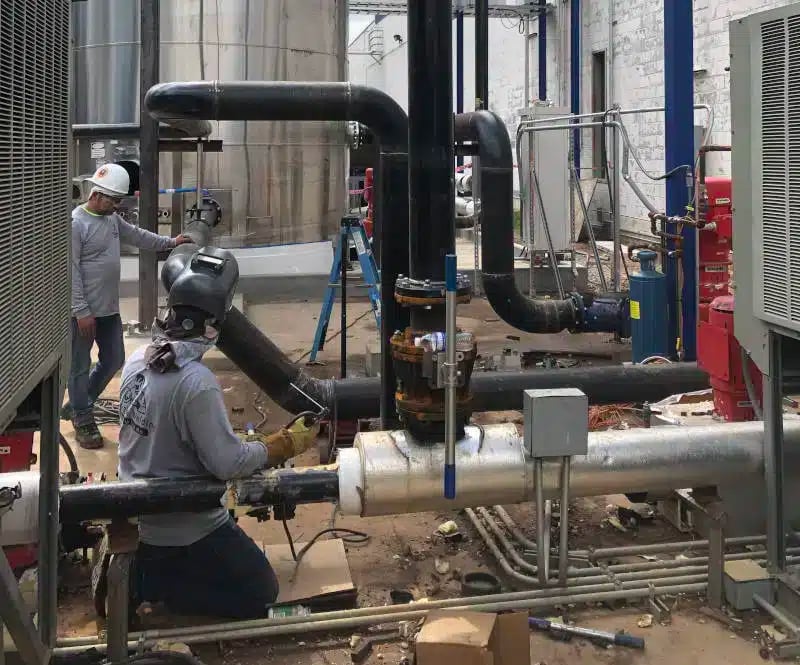
Hilton Mechanical Contractors thrives on code work. We implement extensive documentation practices to meet customer requirements. Our pipefitters and certified pipe welders take pride in their work, they deliver the finest to-spec work in the market. When HMC installs a system our customers can expect the highest quality of craftsmanship and a superior finished product. We also offer the ability to certify our welders on any required process or procedure for your project. Reach out to us to talk about the specifications of your upcoming project and how Hilton Mechanical Contractors can accommodate them while delivering a superior product.

Unlocking Innovation: Mechanical Design

Design Services

Hilton Mechanical Contractors offers top-notch mechanical design solutions for a variety of industries including:

  • Industrial Piping
  • Processing Plants
  • Fabrication Shops
  • HVAC
  • Oil & Gas
  • Manufacturing Plants

Unlocking Innovation: Mechanical Design

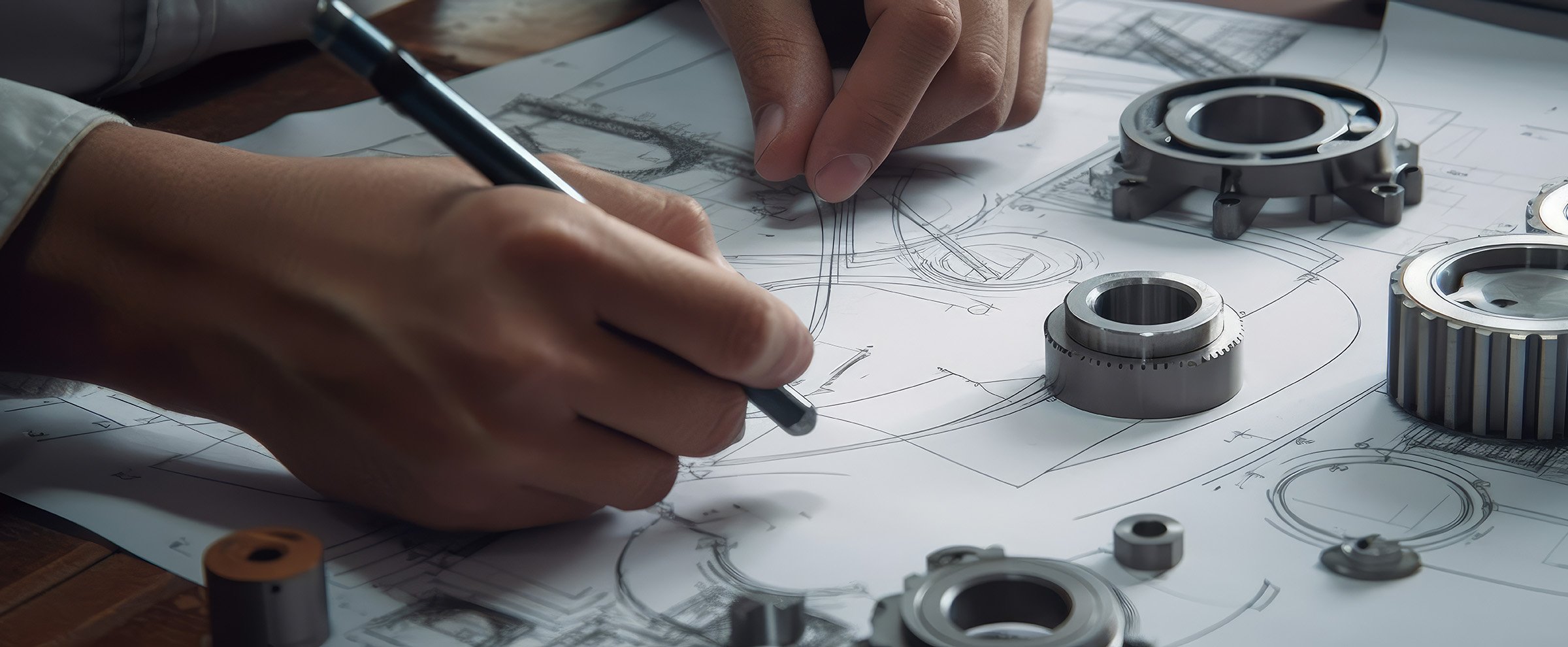
Mechanical design is the backbone of innovation in engineering and product development. It’s the process of transforming ideas into tangible, functional solutions that serve a variety of industries. Here, we’ll explore how Hilton Mechanical Contractors utilizes Mechanical Design to turn your ideas and concepts into working products.

1) Identify the problem-

Problems present themselves in all shapes and sizes and Hilton Mechanical is here to offer a solution. Ask us how we can help create an effective solution for your individual challenges.

2) Research & Conceptualize-

Our team is dedicated to offer a variety of solutions through experience and research to fit the unique needs of each customer. Thorough research and concepts will be created in order to determine the best solution.

3) Preliminary Design-

An initial design will be created using SolidWorks software based on the chosen concept. The design will then be reviewed and accessed with the client based on the individual projects criteria and changes will be made accordingly.

4) Final Design & Review

A final design model will be presented to the client and after the revision and approval process, tailored workshop drawings will be drafted by our engineering team for manufacturing and assembly.

Jobsite Safety

The most important topic in construction today is safety. Hilton Mechanical Contractors is dedicated to the safety of our team as well as those working around us. All of our employees are OSHA trained and follow all OSHA guidelines while on the job. Our crews practice pre-task planning to make sure all hazards are identified and everyone is informed on the plan to safely complete the task at hand. We believe in continued training for our team and have weekly safety meetings to continue education on important topics and hazards.

Hilton Mechanical Contractors is dedicated to quality and we believe that safety is a fundamental aspect of quality.